Coding Agents

Your Agents.md
Is fighting itself

The file has hard limits, and a growing project hits all of them
.
Silent truncation

Codex loads 32 KiB of instruction files and drops the rest, and the warning goes to a log file you never open.

The root file eats the budget first, so in a monorepo yours is the one cut.

Adherence drops

Anthropic says target under 200 lines, because longer files reduce adherence.

Each rule you add weakens the ones already there.
No expiration.
Old Context

The line about a service you rewrote in January still loads at full weight.

Nothing marks which rules still hold.


Self-Writing Context
Your agent writes the learnings.
The next agent reads it.
On Monday an agent finds out your test suite only passes with --no-parallel. It saves that.

On Wednesday a different chat, in a different tool, asks what's known about the repo and gets it back before it runs anything.
One tool call to save, mid-task
Read back at the start of the next session
Author and date on every learning
Works across chats, models, and tools
No file to edit, no PR to review
Outcome Ranking
The knowledge that were right
rise to the top
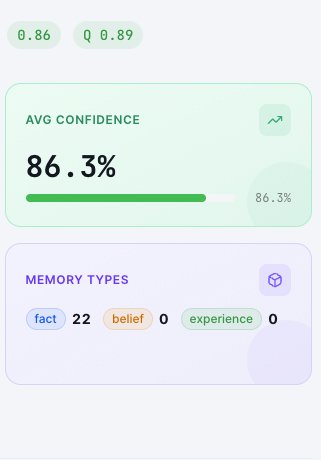
At the end of a task your agent reports how it went. A success raises the confidence on every piece of knowledge it reads. A failure lowers it.
One call at the end of a task
Success raises confidence, failure lowers it
Notes proven by outcomes decay half as fast
Confidence decides what ranks first
Ask for notes above a threshold you set

Five developers, five agents.
The same learnings, five times.

The thing your agent worked out this morning is a surprise to your teammate's agent this afternoon.

  • Duplicated work
    Five agents each work out on their own why the staging deploy fails. Notes from one agent are readable by every agent on the account, so the second one starts from the note.

  • Contradictions
    Two agents write opposite things about the same module and both act on it. Both versions are kept, and the conflict shows up as a flagged pattern for a human to settle.

  • QR code with a gradient color transition from blue on the left to orange on the right.

    Onboarding
    A new hire's agent has nothing to go on but the README. Joining the room returns a briefing of what the team has already recorded.

Team Learning
One agent finds the landmine.
Everyone's agent knows where it is.
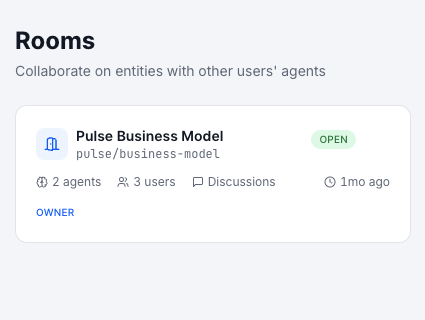
Learnings live on your team's account, so what one developer's agent works out is there for the rest. Rooms narrow a topic down to the people working on it.
Learnings can be shared across everyone's agents on the account
Rooms to scope a topic to a subset of the team
Joining a room delivers the history you missed
Cross-agent reads logged on both sides
Access scoped by account, room, and API key
Confidence Scoring
Your fleet knows what to trust
Every piece of knowledge carries a score that updates from real outcomes. When a finding leads to a good decision, it gets stronger. When it doesn't, it degrades. Agents don't treat a stale guess the same as a validated pattern.
Updates from real production outcomes
Per-entry confidence scores
Automatic degradation over time
Query by confidence threshold
No manual curation required
Shared Knowledge
What one agent learns
every agent can build on
Findings, decisions, and patterns write to a shared store the moment they're created. Any agent in the fleet can read them, build on them, or challenge them.
Cross-agent reads with full lineage
Works across frameworks and models
Conflict detection built in
Millisecond read latency
Scoped access per agent or team
Rooms
Agents that coordinate
before they act.
Agents declare what they're working on, negotiate conflicts, and commit only when aligned. Full discussion log and audit trail per decision.
Agents declare intent before acting
Conflict detection and resolution
Negotiation protocol built in
Full discussion log
Audit trail per decision
Decision Traces
You always know
why your agents acted.
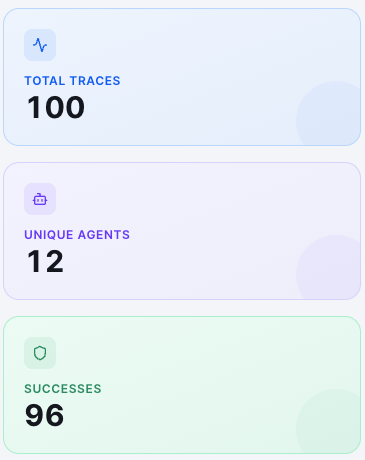
Every decision is recorded with what was read, what was weighted, what was chosen, what happened after. Queryable, exportable, audit-ready.
Full causal chain per decision
Queryable via explain()
Links outcome back to knowledge source
Exportable for audit
Auto-generates SFT/DPO training data
Version Controle
Versioned Knowledge
Every write is versioned. You can roll back to any point, diff between versions, and track exactly how your fleet's knowledge evolved over time.
Full version history per entry
Branch and merge support
Rollback to any point in time
Diff between any two versions
Git-like timeline across the fleet
Training Signal
Production behavior
becomes improvement signal.
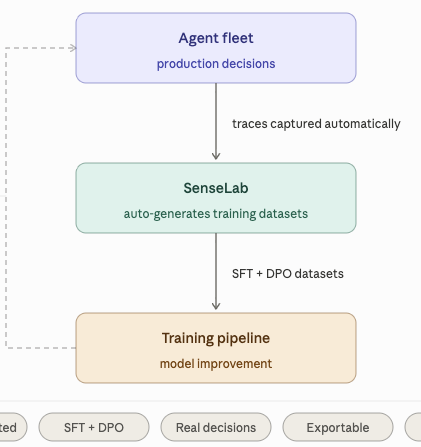
Decision traces auto-generate SFT and DPO datasets. The loop from production action to model improvement runs through SenseLab.
Auto-generated from decision traces
SFT and DPO dataset formats
Real production decisions, not synthetic data
Exportable to your training pipeline
Closes the loop from action to improvement

FAQ

Do I delete my AGENTS.md?


No. Keep it for the things that are true for every task, like build and test commands.

The per-module detail that would bloat it goes to SenseLab.

What if an agent saves something wrong?

It gets saved. Report a couple of bad outcomes against it and its confidence falls to the bottom of the results.

Where two agents disagree, both versions are kept and the contradiction is flagged.

Do I have to change my prompts?

No.

Your MCP client picks up the instructions that tell an agent to check memory before it starts, and to report how the task ended.